The tree comes down first, and almost never because I wanted it to. Somebody loses a walnut in a storm, or a farmer clears a fencerow, or the county takes an ash out of a right of way. I get a phone call, I go and look, and about one in four of them is worth putting on a trailer.
The other three are usually fine trees and bad logs. A yard tree that has spent forty years with a clothesline nailed to it has steel in it, and steel finds the bandsaw blade at about a hundred dollars a time. A leaning tree has tension wood in it that will twist a slab into a propeller six months after I flatten it. You cannot see either one standing up. You learn to read the bark and the lean and you still get it wrong.
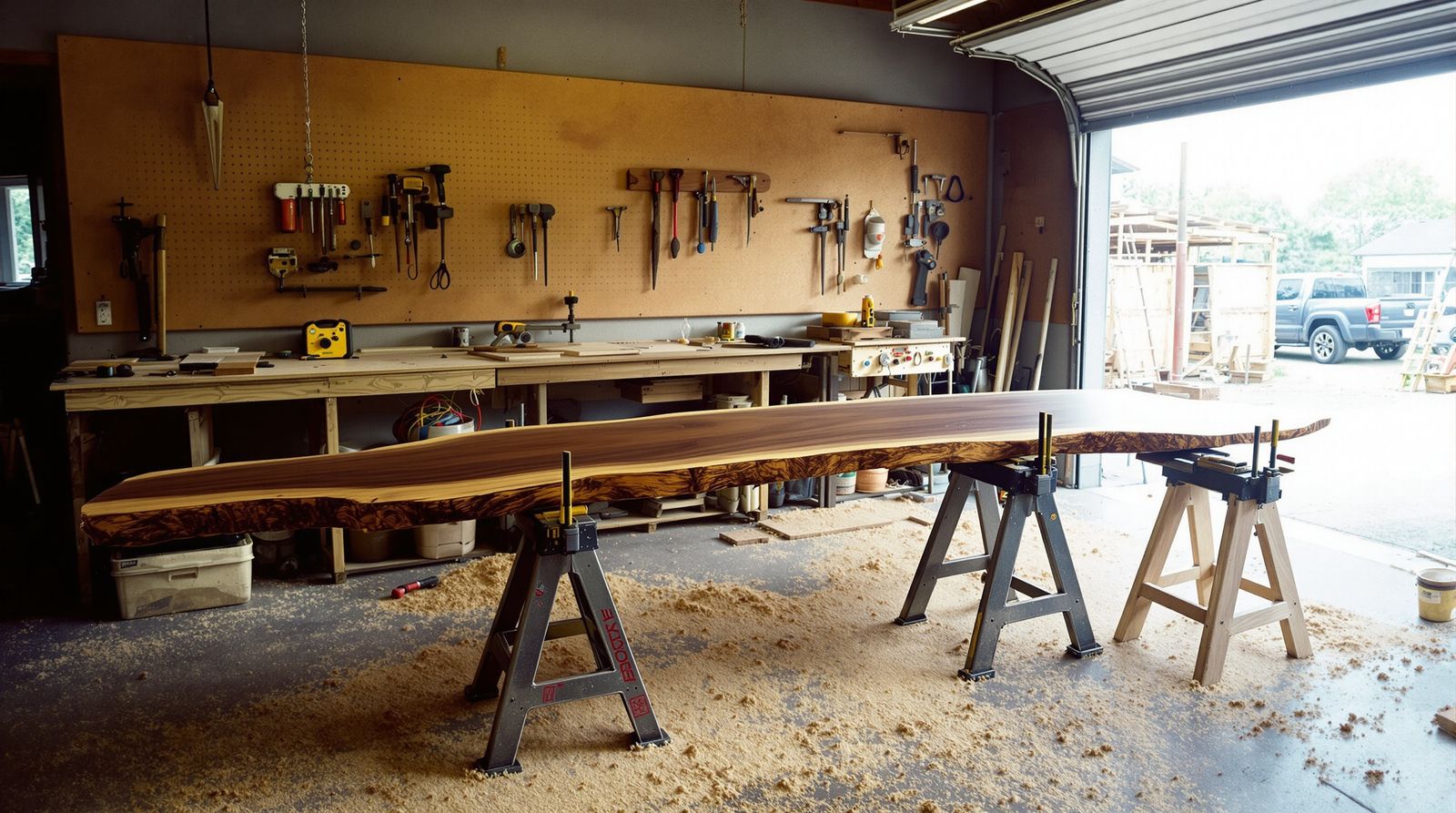
What comes back gets sawn into slabs the same week, because a log left round on the ground starts checking from the ends and staining from the sap. Two inches thick for benches, two and a half for a table that will take weight in the middle. Then they go in the barn on stickers, which are just thin strips of scrap laid crossways every eighteen inches so air can get at both faces.
And then I wait. That is the part nobody wants to hear. Not because it makes me sound patient, but because it means the bench you order in March was a tree in 2024, and the tree that came down last week is for somebody who has not called yet.
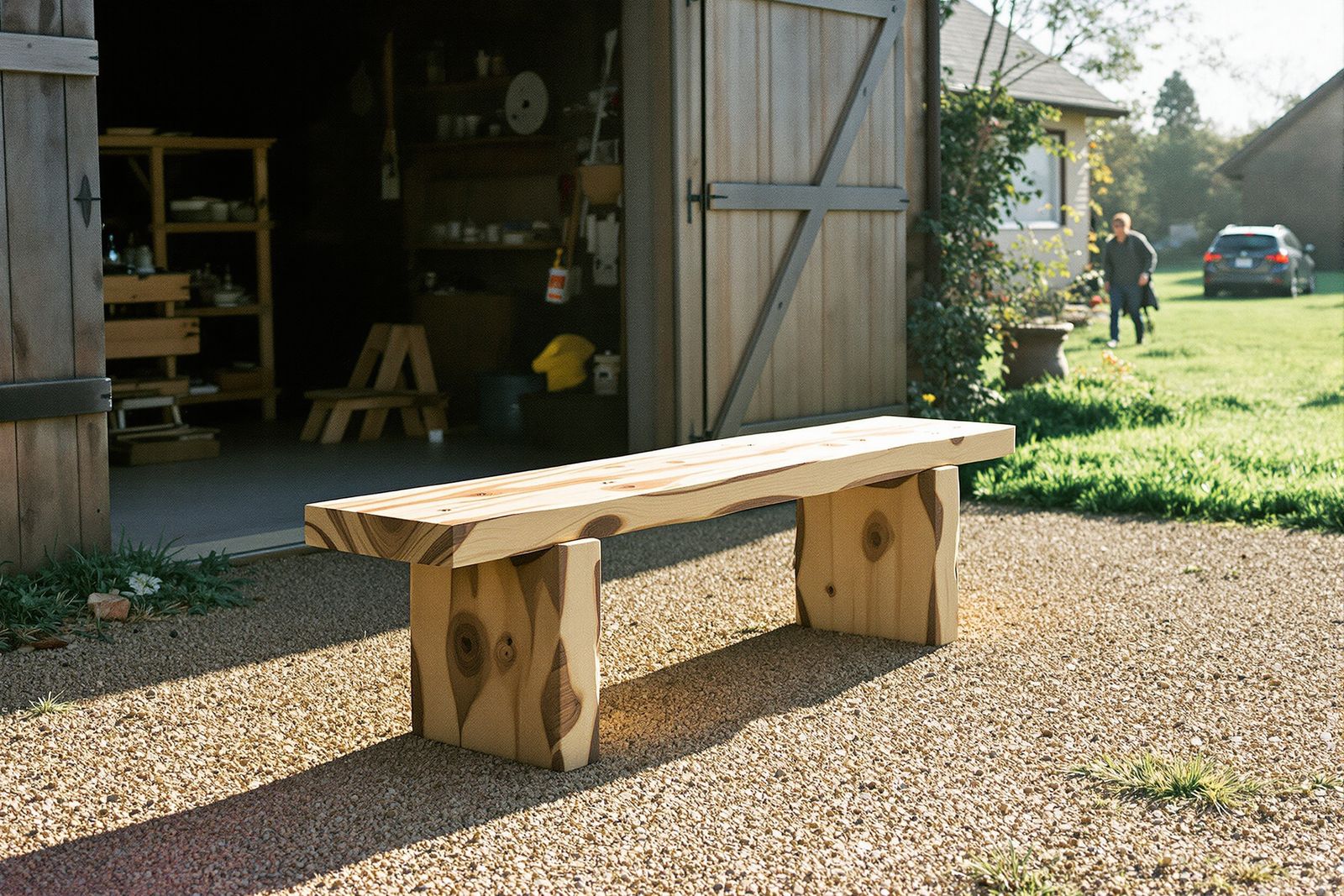
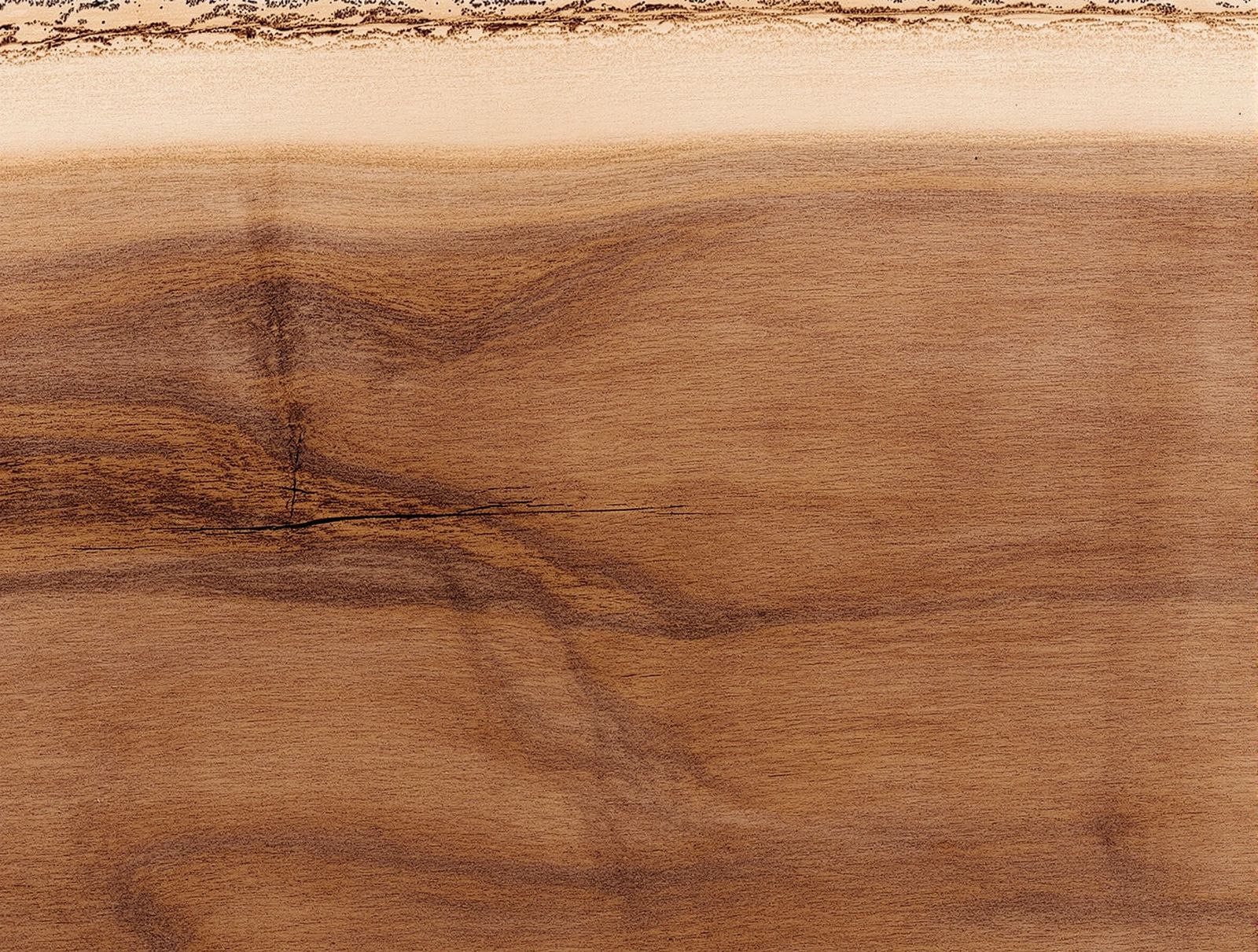
Once it is dry, the work itself is quick and mostly loud. Flatten both faces, joint one long edge if the piece needs to be square to something, and leave the other edge alone. The bark comes off if it is going to come off anyway, which on ash is always and on hedge is never. Then legs. Then oil.
I get asked for epoxy rivers constantly and I do not do them. Not out of principle about what is proper furniture, but because a river table is a resin casting with some wood in it, and resin is a different trade with different failure modes. There are people two counties over who do it properly and I would rather send you to them than learn on your table.
What I will do is fill a check with a butterfly key, which is a bowtie of contrasting wood let into the surface across the crack so it cannot open further. They are mechanical, they are older than any of us, and they look like a decision rather than an accident. Most benches get two or three. On a slab with none, I did not need them, and I will not put them in for decoration.
Finish is a hardwax oil, three coats, wet sanded on the second. It is not a bar top finish and it will not survive a hot pan. It also means that in eleven years when the top looks tired you can scuff it and put another coat on in an afternoon, in your own house, without sending it anywhere. A polyurethane cannot be repaired like that. It can only be stripped.
The boxes are a different thing entirely. Cedar, dovetailed, and my wife paints wildlife on the lids. They started as a way to use offcuts and they are now half of what leaves the shop in December. They are also the only thing here you can have inside two weeks.